What Washington Orchard Growers Are Teaching the Industry About Regenerative Agriculture
Visiting growers in Washington State reveal what regenerative agriculture, conservation practices, and long-term stewardship actually look like across orchard operations today.
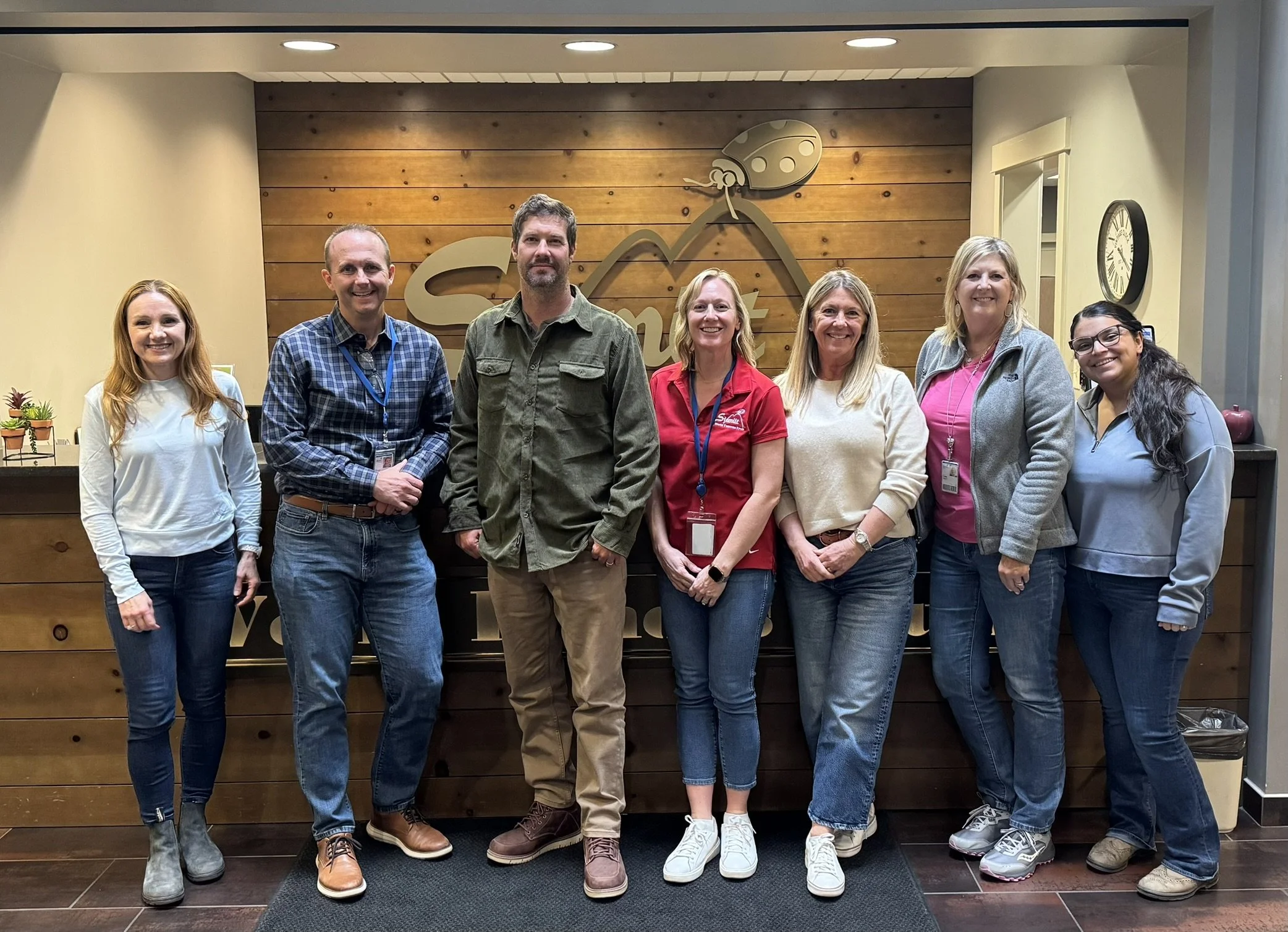
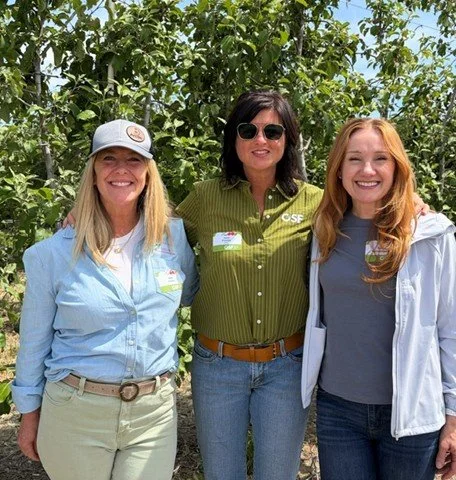
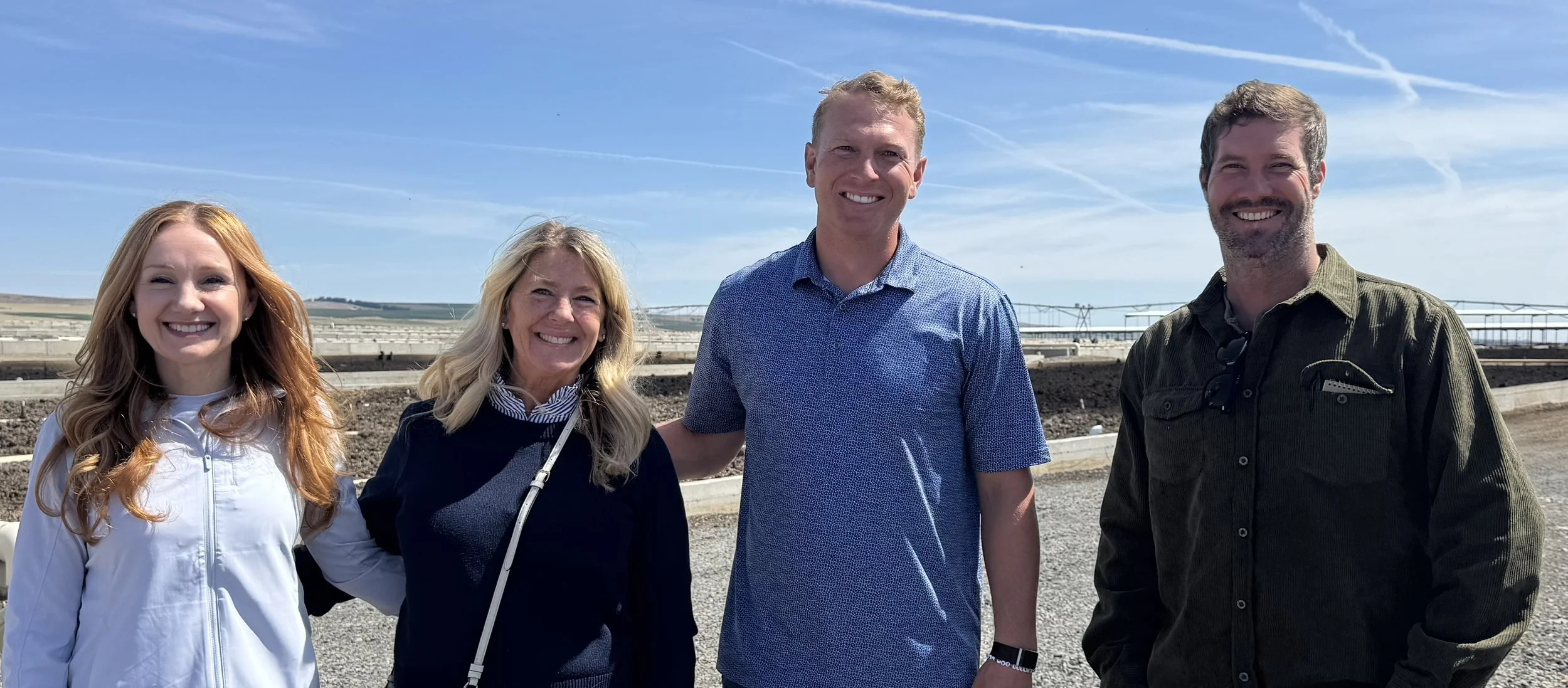
In mid-May, the Measure to Improve team joined the International Fresh Produce Association (IFPA) for a series of visits across Washington State focused on current and future participants in the USDA Advancing Markets for Producers (AMP) Program.
What began as a trip centered around the USDA grant quickly became something much bigger: an opportunity to hear directly from growers, sustainability leaders, researchers, and technology innovators about what regenerative agriculture, conservation practices, and long-term stewardship actually look like across orchard operations today.
Throughout the week, the team visited:
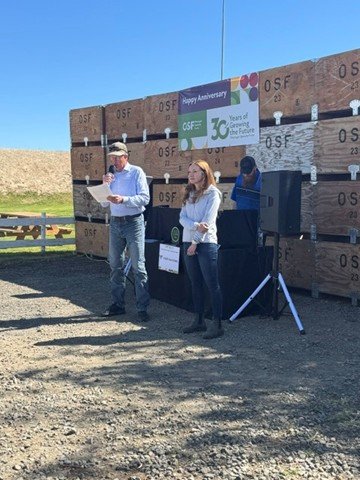
Okanagan Specialty Fruits and their 30-Year Regenerative Ag Orchard Tech Showcase
Each organization generously shared their time, operations, stewardship efforts, operational challenges, successes, and practical lessons learned from implementing regenerative agriculture, conservation practices, and innovation across their orchard systems.
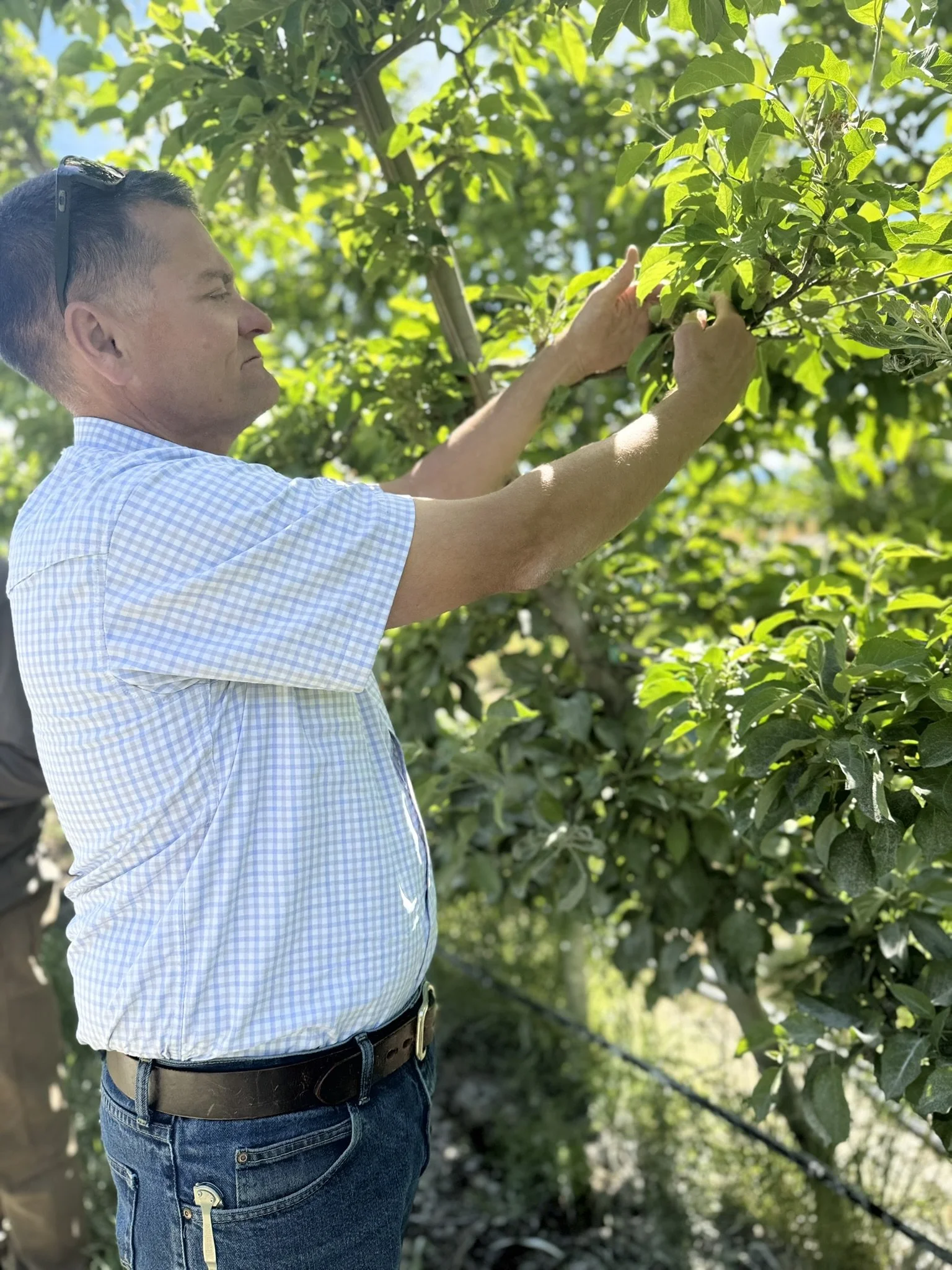
Common Themes Across Every Visit
While each organization approached sustainability differently, several common themes surfaced throughout the week:
Soil health and water management remain major priorities
Growers are already implementing many regenerative agriculture practices
Technology is becoming an important tool for efficiency and resiliency
Labor shortages, rising costs, and market pressures continue to challenge growers
Long-term stewardship still has to work operationally and economically
Collaboration and shared learning are critical to moving the industry forward
Across nearly every conversation, there were honest discussions around labor availability, water concerns, operational costs, retailer expectations, and the realities of balancing long-term stewardship with profitability and day-to-day farm operations.
The conversations also reinforced that growers are not looking for silver bullets or one-size-fits-all solutions. They are looking for practical tools, workable systems, and approaches that can realistically support long-term farming operations.
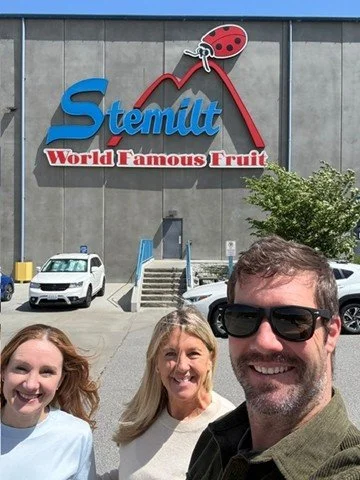
Stemlit: Long-Term Stewardship in Practice
Our visit with Stemilt Growers focused heavily on composting, soil health, orchard resiliency, water management, Integrated Pest Management (IPM), and long-term stewardship.
One of the biggest takeaways was hearing how many regenerative practices have already been part of the operation for years, long before “regenerative agriculture” became a widely used industry term.
At the same time, the team openly discussed the realities growers are facing today, including labor costs, retailer expectations, water concerns, compliance pressure, and balancing sustainability investments with long- term profitability.
One comment that stood out was the idea that sustainability is increasingly becoming “table stakes,” not necessarily something that creates a premium, but something increasingly necessary to maintain market access.
Stemilt’s continued focus on innovation, orchard health, and long-term stewardship reflected a strong commitment not only to sustainability goals, but to the long-term success of its orchards, employees, and communities.
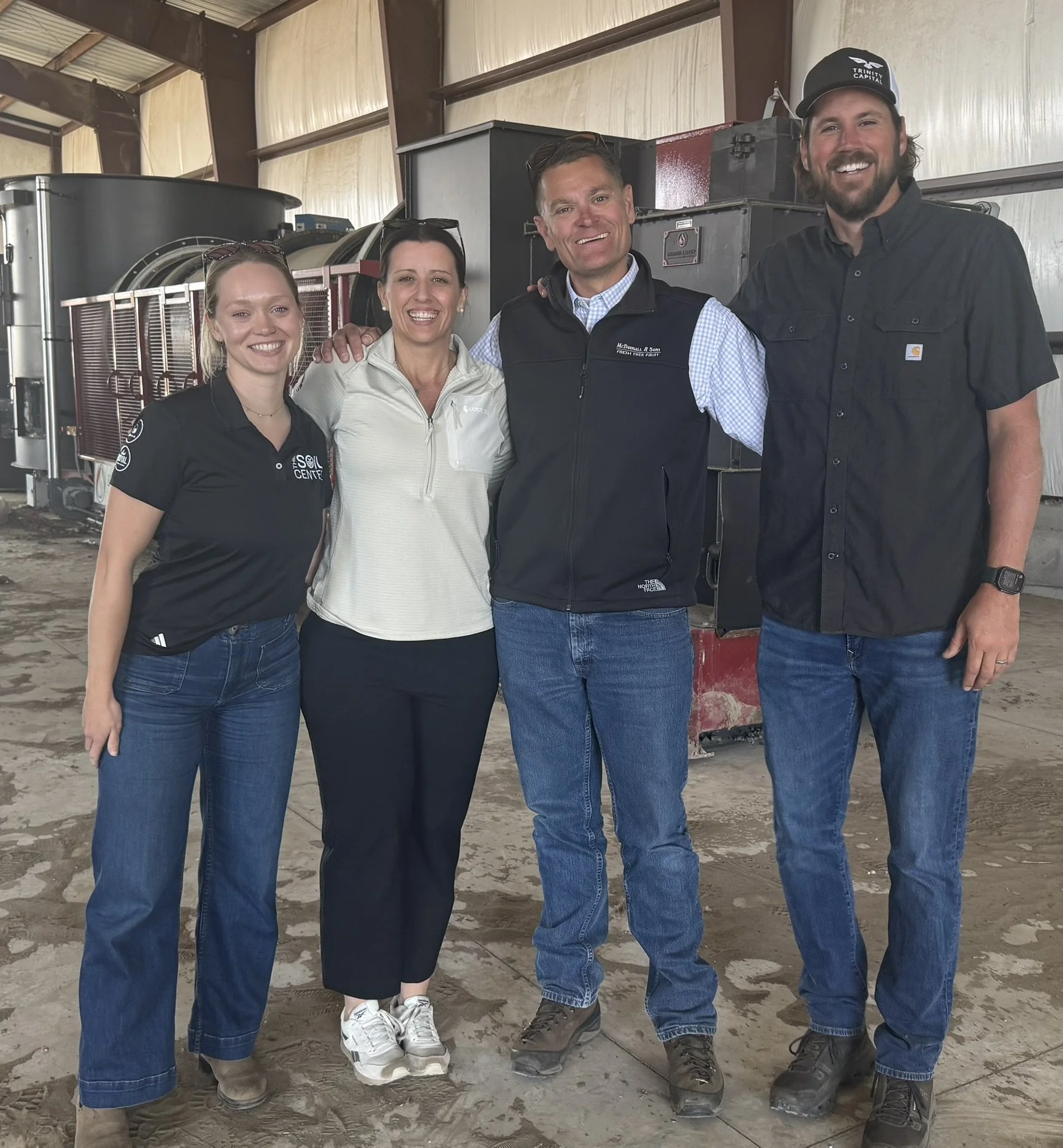
CMI Orchards: Circular Systems and Soil Health
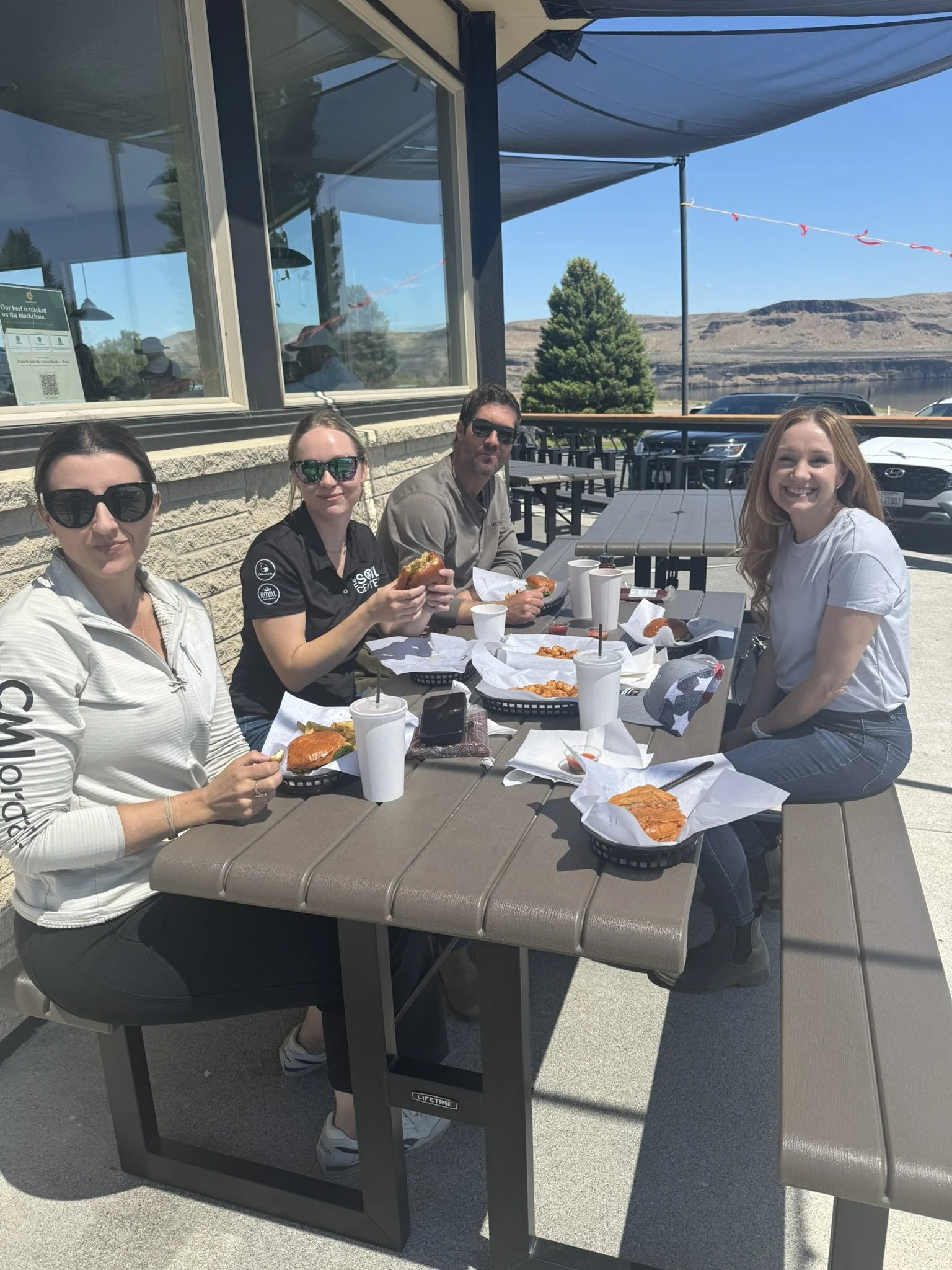
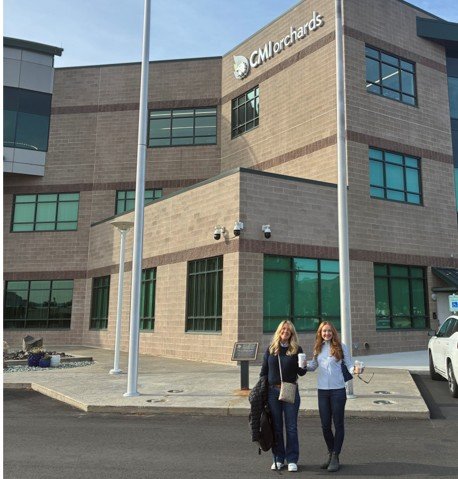
Our visit with CMI Orchards, Royal Family Farming, The Soil Center, Legacy Orchards, and The Ranch highlighted how sustainability can become integrated across an entire agricultural system.
The day focused heavily on composting systems, nutrient cycling, soil health, biochar, water management, and orchard resiliency.
One of the most impactful parts of the visit was seeing how materials and byproducts are being returned back into the orchard system through composting and soil amendments rather than treated as waste. Discussions throughout the day reinforced how closely soil health is tied to orchard productivity, resiliency, and long-term performance.
There was also a strong focus on practical implementation, continuous improvement, and building systems designed to support agriculture over the long term.
What stood out most was the openness and willingness to share both successes and challenges. The conversations reflected a strong commitment to collaboration, innovation, and helping move the industry forward through shared learning and real-world experience.
Okanagan Specialty Fruits: Innovation and the Future Orchard
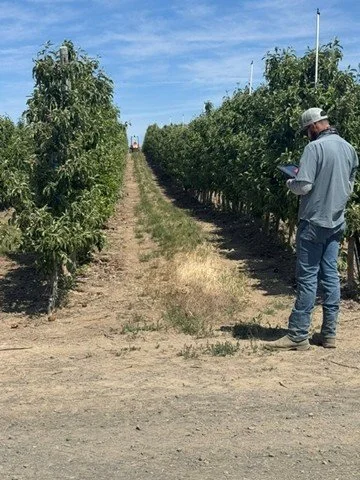
Our visit with Okanagan Specialty Fruits and the 30-Year Regenerative Ag Orchard Tech Showcase highlighted how quickly orchard innovation is evolving.
We were honored to be included in the company’s 30-year celebration and appreciated the opportunity to learn more about its journey, innovation, and long-term commitment to the industry.
The showcase brought together growers, researchers, and technology providers to explore automation, AI, precision agriculture, irrigation technology, biological systems, and regenerative agriculture tools.
A major takeaway was that technology and sustainability are increasingly connected. Many of the tools being demonstrated focused on helping growers reduce labor demands, improve water efficiency, reduce unnecessary inputs, support soil health, and remain economically competitive.
The conversations reinforced that growers are looking for practical tools and strategies that help them continue farming successfully in an increasingly complex environment.
Okanagan Specialty Fruits also openly shared the realities behind its innovation journey over the last 30 years, including research and development challenges, regulatory hurdles, operational risk, and the long timelines often required for innovation in agriculture.
The Bigger Takeaway
Across every visit, growers openly shared both successes and challenges while emphasizing the importance of practical implementation, collaboration, and long-term stewardship.
Programs like the USDA AMP initiative help support that progress by creating opportunities for growers to:
Test regenerative agriculture practices
Explore new technologies
Reduce implementation risk
Collect meaningful data
Learn from one another
Equally important, programs like AMP help create space for growers, researchers, retailers, and industry organizations to better understand the operational realities behind agriculture today. Most importantly, the week reinforced that meaningful progress is already happening across agriculture because growers, researchers, and industry leaders are willing to continue learning, adapting, and investing in the future of farming together.
At Measure to Improve, we believe the future of sustainable agriculture will continue to be shaped through practical implementation, innovation, collaboration, and growers who are committed to long-term stewardship while adapting to the realities of modern farming.