Special Edition: EPR & SB 54 CA Plastic Reduction
What Fresh Produce Companies Need to Know
California’s packaging Extended Producer Responsibility (EPR) law is moving beyond registration and annual reporting. The next major requirement asks producers to look ahead and explain how they plan to reduce plastic packaging and food service ware in the coming years. Producers participating in Circular Action Alliance’s (CAA) California EPR program must submit their Individual Source Reduction (ISR) Plan by August 3, 2026.
Here is what fresh produce companies need to know:
How SB 54’s Source Reduction Target Applies to Individual Producers
What ISR Plans Should Address
Why Source Reduction Is Complex for Fresh Produce
How Source Reduction May Affect Future Fees
How to Prepare for the August 3 Deadline
How SB 54’s Source Reduction Target Applies to Individual Producers
California’s SB 54 establishes an Extended Producer Responsibility (EPR) program covering single-use packaging and single-use plastic food service ware, placing greater responsibility on producers for managing this material after use.
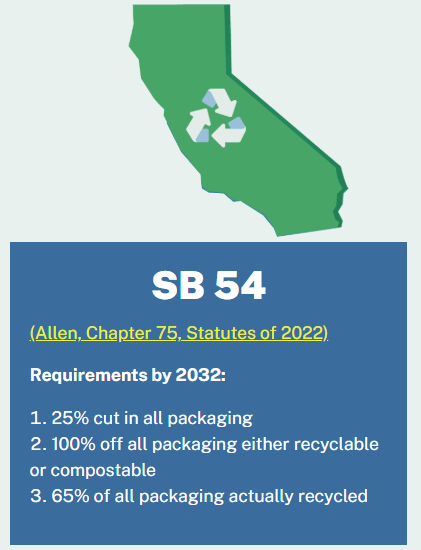
The law sets a statewide target to reduce plastic covered material by 25% by weight and by number of plastic components by 2032, compared with a 2023 baseline.
The 25% target applies across California as a whole. It does not necessarily mean every producer will be required to reduce its plastic packaging by exactly 25%.
However, every producer’s ISR Plan should demonstrate how it plans to contribute to the statewide target. The amount each producer reduces may vary based on several factors, including available opportunities, the feasibility of changing its packaging portfolio, and financial incentives designed to encourage source reduction.
What Individual Source Reduction Plans Should Address
The ISR Plan asks each producer to identify how much plastic covered material it plans to reduce and how it expects to achieve those reductions. Producers must report anticipated source reduction during 2026, 2029, and 2031, broken down by the five reduction pathways identified in SB 54:
Shifting from single use to refillable or reusable material
Eliminating a plastic component altogether
Shifting from plastic to non-plastic materials
Concentrating, lightweighting, right-sizing, and shifting to bulk/large format
Increasing the use of post-consumer recycled (PCR) content (up to a limited amount)
The plan is forward-looking, but it must be grounded in data. Producers will need to understand the amount of plastic material they supplied in California during the 2023 baseline year and consider how sales, product mix, packaging changes, and other business developments may affect future plastic use.
This is an important distinction. A company may reduce the weight of an individual package while still increasing its total packaging weight as sales grow. Because California’s target requires a net reduction from 2023, not simply a reduction per package, future business growth and product forecasts should be incorporated into the planning process.
Source Reduction is Complex for Fresh Produce
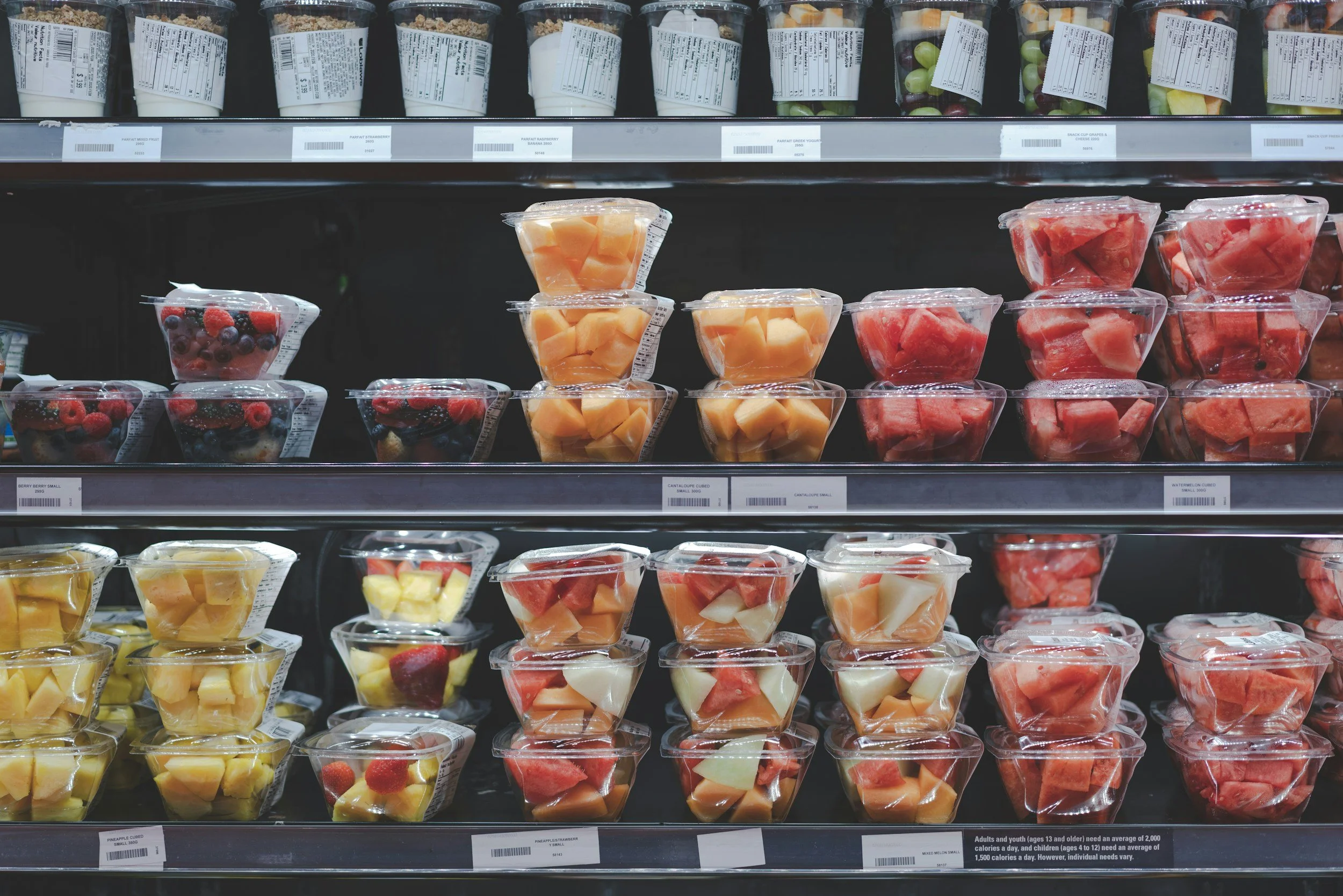
Reducing packaging is not a new concept for the fresh produce industry. Packaging is a cost, and many companies have already pursued lighter packaging, smaller labels, thinner films, optimized container sizes, and other material efficiencies.
At the same time, fresh produce packaging serves important functions. It can protect food safety, maintain product quality, extend shelf life, communicate required information, support merchandising, and withstand packing and distribution conditions.
A packaging change that reduces plastic but increases product damage, food loss, contamination risk, or operational complexity may create new environmental and business consequences.
For this reason, packaging decisions cannot be made by sustainability or compliance staff alone. A realistic reduction plan may require collaboration among packaging, procurement, operations, production, quality assurance, food safety, marketing, sales, finance, and leadership. Packaging suppliers, retail partners, and customers may also need to participate.
Source Reduction May Affect Future Fees
Circular Action Alliance (CAA), the nonprofit organization that serves as California’s producer responsibility organization (PRO), has drafted a California program plan that includes a proposed two-tiered bonus approach intended to encourage source reduction.
Under this type of proposed incentive mechanism, producers that reduce more plastic may qualify for bonuses that lower their fees, while producers that reduce less plastic may face maluses that increase their fees.
The details remain subject to the final CAA program plan and CalRecycle approval. However, the direction is clear: plastic reduction may affect not only a producer’s compliance strategy but also its future EPR costs.
Companies should therefore evaluate reduction opportunities carefully. Some changes may require investment in new packaging, equipment, testing, or supplier relationships. Others may produce operational savings.
Understanding the costs, benefits, timing, and feasibility of each opportunity will help producers develop plans they can reasonably implement.
Preparing for the August 3 Deadline
A strong ISR Plan begins with a credible 2023 baseline. Producers should confirm that their baseline captures the appropriate California supply and packaging data and that plastic weights and component counts can be substantiated.
Companies should then:
Project California sales and packaging use for 2026, 2029, and 2031.
Document packaging changes completed recently or underway.
Identify additional reduction opportunities by product or packaging component.
Engage the departments responsible for evaluating and implementing each change.
Set projections that are ambitious but achievable.
Source reduction planning can be challenging, time-intensive, and costly. Waiting until the reporting deadline to begin cross-functional discussions may result in a plan that is incomplete or disconnected from business realities.
The ISR Plan should not be treated as just another EPR reporting requirement. It is an early opportunity to connect compliance, packaging strategy, operational planning, and future EPR fees.
For fresh produce companies, the goal should be to identify reductions that support California’s requirements without compromising food safety, product quality, shelf life, or operational performance.
We Are Here to Support
Measure to Improve’s EPR Readiness Solution helps fresh produce companies understand EPR requirements, build their internal EPR team, and establish a strong foundation for ongoing compliance.
Contact us to learn more and discuss how we can help your team prepare.