Regenerative Agriculture: Creating a Shared Understanding in Specialty Crops
Why Measure to Improve is focused on a clearer starting point, not another definition.
Regenerative agriculture continues to gain attention across the food and agriculture industry. Growers are hearing about it from customers, buyers and food companies are developing commitments around it, and government agencies, researchers, nonprofits and certification programs are approaching it in different ways.
As interest grows, so can the confusion. The challenge is not that regenerative agriculture lacks definitions. It has many. No single definition has been universally adopted across government and industry, so what someone means by regenerative agriculture can depend on who is using the term.
We are seeing this same challenge reflected across the broader industry. Organizations are working to create greater alignment around regenerative agriculture while also recognizing that farming systems, regions and individual operations are different.
That raises an important question: How do we create enough common understanding to move forward without turning regenerative agriculture into a one-size-fits-all approach?
How Measure to Improve Approached This Work
At Measure to Improve, much of our work involves helping growers and companies navigate sustainability issues that can quickly become complicated. Our approach has always been practical: understand what is being asked, break it down, and help people understand what it means for their operation or business.
We brought that same approach to regenerative agriculture.
Rather than asking, How should regenerative agriculture be defined? we asked: What do existing definitions and approaches have in common, and what does that mean in specialty crop production?
We reviewed regenerative agriculture definitions and approaches from organizations and programs including IFPA, CDFA, USDA NRCS, Rodale Institute, Soil Health Institute, Kiss the Ground, General Mills, Nestlé, SAI Platform, Regenified and Regenerative Organic Certified.
The language varies, but many of the same themes consistently appear:
Soil Health
Water Stewardship
Healthy Ecosystems & Biodiversity
Long-Term Farm Viability
A Holistic Approach
Continuous Improvement
People & Community Well-Being
That common ground became more useful to us than trying to choose one definition over another.
What Does This Mean in Specialty Crops?
This is where context matters.
Regenerative agriculture is often described as a systems approach that integrates multiple practices and management decisions. How those themes are supported can vary by crop, region, production system, and farm goals.
A vegetable operation is different from an orchard, and what works in one region may not be appropriate in another. Water availability, climate, crop type, production system, resources and farm goals all influence management decisions.
That is why our work intentionally does not create a checklist to determine whether a farm is or is not regenerative.
Themes Are Not the Same as Practices
This distinction is important.
The themes describe areas that repeatedly appear across regenerative agriculture definitions and approaches. Practices are examples of how those themes may show up on a farm.
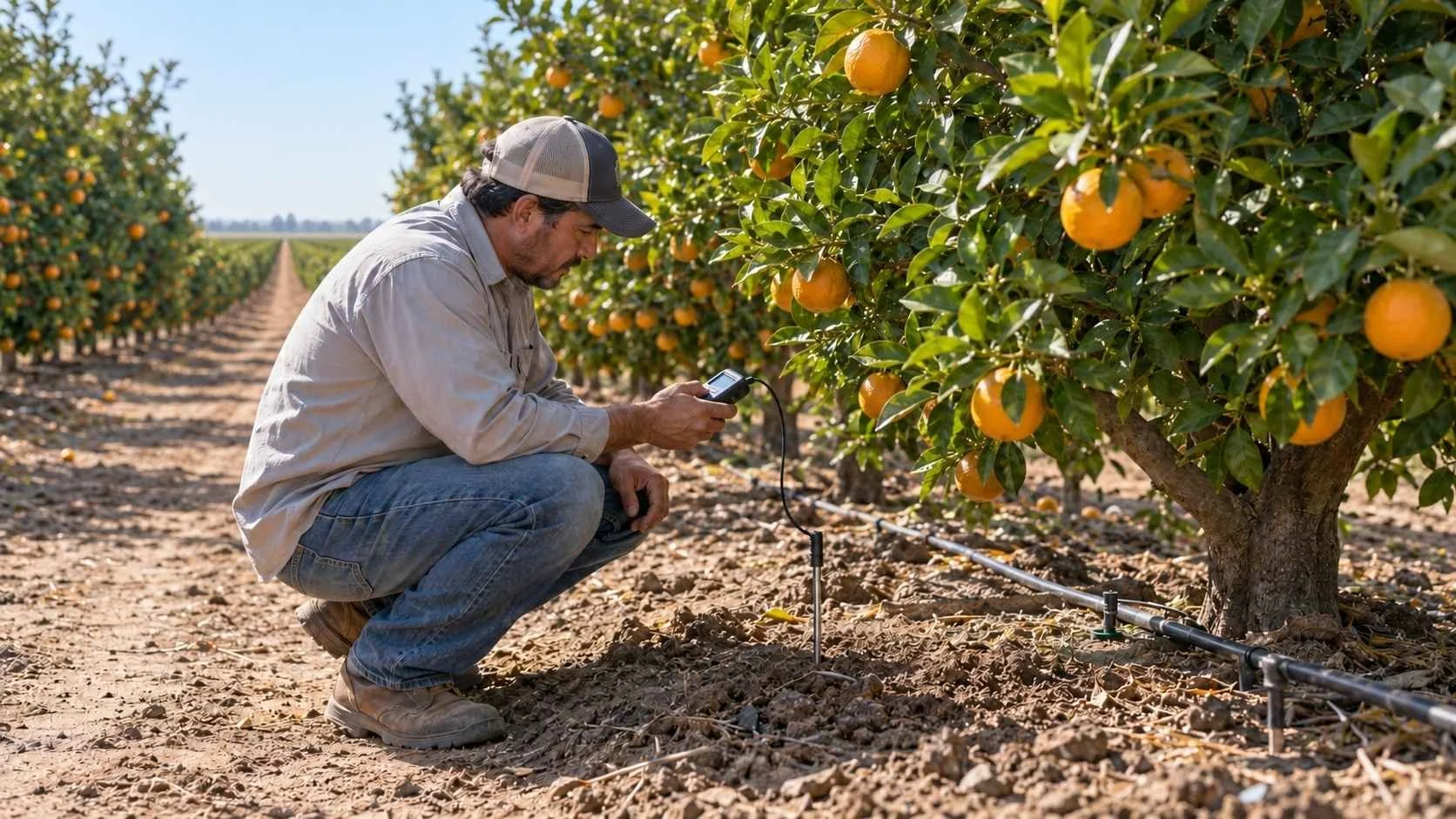
Depending on the operation, those practices might include cover crops, nutrient management, efficient irrigation, soil moisture monitoring, integrated pest management, on-farm trials or recordkeeping.
Those practices are examples, not requirements. Which practices make sense, and how they will be used vary by crop, region, production system and farm goals.
Keeping that distinction clear allows us to recognize common ground without prescribing a single pathway for every grower.
Our Goal Is a Shared Starting Point
Measure to Improve’s goal is not to create another definition of regenerative agriculture. It is to make regenerative agriculture easier to understand in specialty crop production and provide a shared starting point across the supply chain.
Our Regenerative Agriculture in Action visual guide brings what we found together around three broad focus areas:
Stewarding Natural Resources — Protect and build the foundation for productive, resilient systems.
Supporting Resilient Farms — Improve resource efficiency and strengthen long-term farm viability.
People and Community Well-Being — Strengthen worker well-being and community connections that contribute to long-term agricultural success.
From there, the visual guide connects common themes across regenerative agriculture with examples of practices that may support those themes and the potential outcomes those efforts can contribute to.
Regenerative Agriculture in Action
The visual guide is not intended to prescribe a single way to implement regenerative agriculture. Its purpose is to make these relationships easier to see and understand while recognizing that implementation will look different depending on the crop, region, production system and farm.
View or download the Regenerative Agriculture in Action visual graphic
Why Shared Understanding Matters
Shared understanding does not mean everyone must use exactly the same definition or farm the same way. It is about helping the specialty crop supply chain have a clearer starting point.
A shared starting point can help growers communicate what is happening on their farms, help buyers communicate more clearly about what they are looking for, and help others across the supply chain use more consistent language when discussing regenerative agriculture in specialty crops.
That becomes increasingly important as interest in regenerative agriculture grows. Without enough shared understanding, a grower may hear one thing, a buyer may mean another, and someone else in the supply chain may interpret it differently.
Creating common ground will not answer every question around regenerative agriculture, but it can be an important first step toward building a better foundation for moving the conversation forward.
The next step is bringing growers and buyers into that conversation together so regenerative practices, measurable outcomes and market priorities can begin to connect.
That is where the opportunity to move from understanding to action really begins.
Rethinking Sustainability
Every sustainability investment creates an opportunity.
The investment is often easy to measure.
The return is not.
Too often, organizations measure success by the report they submitted or the requirement they fulfilled.
The organizations creating the greatest long-term value ask a different question: How can this sustainability investment strengthen our business, improve decision-making, differentiate our brand, strengthen customer relationships, and better prepare us for what’s next?
